
There are many ways to combat panic attacks, but we have found that there are so many different opinions and advice out there, that sometimes it can feel overwhelming.
When having a panic attack it’s extremely hard to remember all the grounding techniques, breathing exercises and focusing on the positives.
Panic attacks are a type of fear response. They’re an exaggeration of your body’s normal response to danger, stress or excitement.
Panic attacks can feel very different from person to person but generally it feels like this:
- a pounding or racing heartbeat
- feeling faint, dizzy or light-headed
- feeling very hot or very cold
- sweating, trembling or shaking
- nausea (feeling sick)
- pain in your chest or abdomen
- struggling to breathe or feeling like you’re choking
- feeling like your legs are shaky or are turning to jelly
- feeling disconnected from your mind, body or surroundings, which are types of dissociation.
These physiological sensations also come with racing thoughts of dread, feeling as if you are losing control, going to faint, going to be sick or even going to die.
It’s not a great feeling to say the least, but usually panic attacks last from 5 to 20 minutes. It’s scientifically proven that your body only has so much adrenaline to release that it can’t release any more! However, after a panic attack, you may experience a secondary panic or even general feelings of anxiety.
Before delving into how to deal with panic attacks, it’s great to remember that you can cope with them. The panic itself cannot physically hurt you and you are not going to die from them. The fear will subside and you will be okay.
From experience, my panic attacks would come from the middle of nowhere or they would come from hours or even seconds of bad thoughts. When a panic attack comes on, there is always a reason for them, your thinking style isnt helping whether you think it is or not.
When I have panic attacks, I suddenly focus on all of the physical sensations my body is feeling at first. I begin to draw focus on how my stomach feels or that I feel really flu-ey. As I suffer from emetophobia, usually all my physical sensations lead to feeling nauseous and that for some reason whether it be a headache or a bruised arm, that i am going to be sick. From personal experience, I can literally feel the rush of adrenaline coursing through my body and I become extremely agitated, flushed and shakey. At times, I even feel really burpy and bloated. When I’ve focused on all these sensations I feel as if there is no way to escape, that I am completely out of control and that nothing will help me. I extremely dislike experiencing these on my own because I feel as if someone who I trust will take away the panic (but no one can do that but you). During the panic attack I tend to either pace around or sit completely still, depending on the feeling. I can feel as if the sky is falling and I have become chicken little. At times I have even hallucinated.
The reason why I am sharing my personal experience of panic attacks is because everyone experiences things differently. People reading this may either resonate with how I feel at times or think, wow I feel completely different. Either way, it’s great to recognise how you feel and not feel so alone when experiencing panic.
However, through all those sensations, worry and probably 5000 panic attacks, I am still standing. I am healthy, I didn’t die, and the things I was panicking about never actually happened. That is because your body and mind will and can cope!
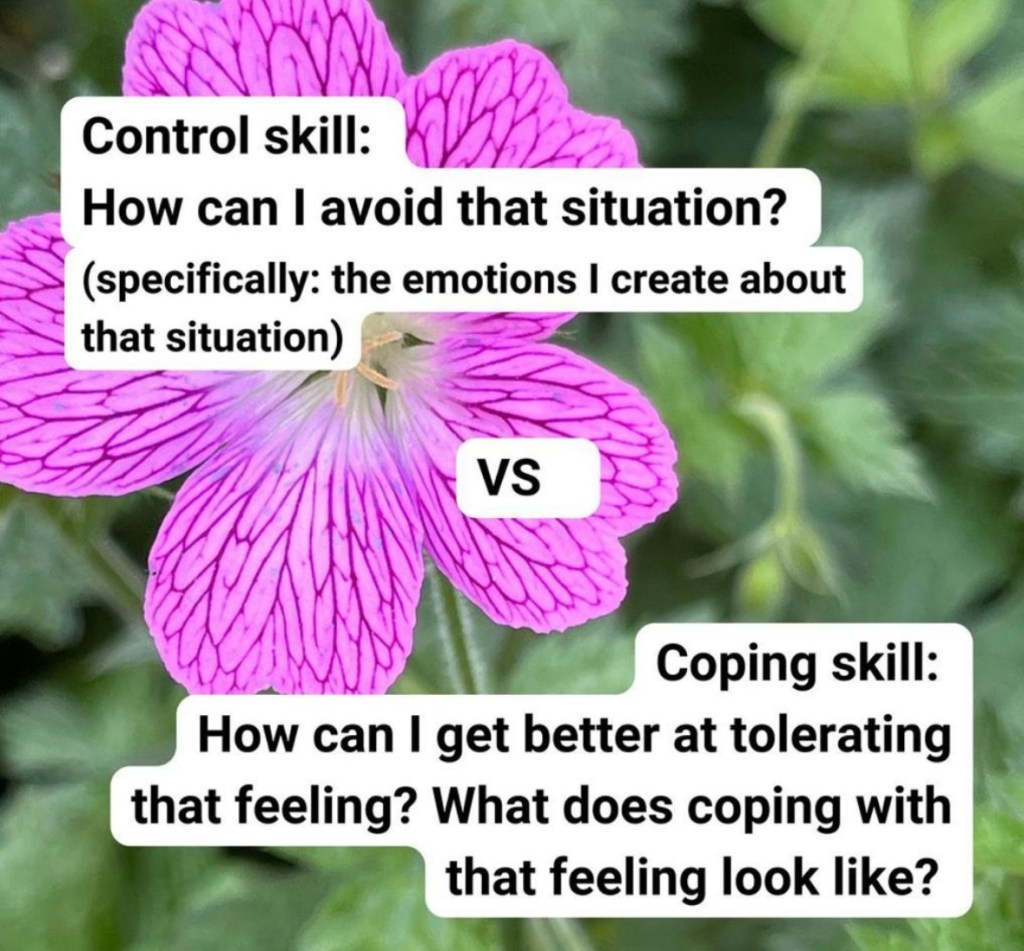
The desire for control over the racing thoughts is what is driving the panic. When having this huge desire to control you can increase the feeling of panic, even causing more panic attacks in the future. Knowing you can cope will drastically reduce the fear of the panic and the fear of the situation that has made you feel anxious. Humans can cope with so much and that means you can too! Let go of the control and keep reminding yourself that you can cope, even if that means saying it out loud over and over again.
If you create the thought, you can uncreate it!

Anyway, here are some more ways to help manage your panic attacks:
- Focus on your breathing: When having a panic attack, your breathing can be all over the place, it can be extremely fast or not even breathing at all for extended periods. Breathing fast or too slow affects your heart rate and blood pressure. This can lead to more panic and more Adrenalin being pumped around your body. Try the 4-6-4 technique. Breathe in for 4, hold for 6 and breathe out for 4. Literally count in your head each second that goes by. If that’s too hard, find your own breathing pattern that suits your body such as 3-3-3. A great app to download is ‘Be Okay’, that has a bubble guiding your breathing through the panic. Another app to download is ‘Rootd’, it will guide you through breathing and also ask questions throughout your panic attack to reduce your fear.
- Do something physical: physically interjecting through the panic attack can reduce the feelings and actually distract you from bad thoughts. Stamping on the spot can release all those bad feelings or throwing a ball to each hand. It can be so many things physical from gardening to tapping your fingers on your leg. Depending on the situation you are in, whether you are on your own in an open space or in a meeting, there is always something physical you can do to relieve the feelings of the panic attack.
- Focus on your senses: Try and focus on 5 things you can see, 4 things you can hear, 3 things you can touch, 2 things that you can smell and 1 thing you can taste. Again you can adjust this pattern to your liking but it really helps getting back in touch with reality. When we experience these panic attacks we loose touch with reality and our surroundings. Getting our brain back in tune to the outside world can help you realise that perhaps it’s not all that scary. It stops the cycle of negative thinking and helps you focus on something else.
- Stimulating: Depending on who you are or what other conditions you may suffer with, stimulating your senses can really help relieve panic attacks and distract yourself from the bad thoughts. A great stim technique is holding a cube of ice, or a bag of ice. Taking off your shoes and touching the ground beneath your feet. Or a fidget toy, or anything that’s in your bag, pocket or clothing that you can fidget with. Really draw your mind onto what you are stimulating yourself with. Always remember it has to be positive and really try to not inflict pain upon yourself, there are so many ways you can feel other physical sensations without feeling pain. Sometimes the best thing to do is literally bumping a bucket of ice cold water on you!
- Thrive DREAM technique: A great technique to calm panic attacks quickly is the DREAM technique that The Thrive Programme offers. I can’t get into the details as it is copyrighted and I may be sued but if you experience panic attacks a lot, I would really encourage you to purchase the book to learn about this technique. Not only does this programme offer you this technique, it also may help to stop your panic attacks completely!
- Tell yourself it’s just anxiety and that it’s not real: Literally telling yourself its just anxiety, its just anxiety, its just anxiety over and over again can really help diffuse the panic. I think once you have had quite a lot of panic attacks, you can usually recognise a pattern of anxiety and so you understand that this is the way you always feel when you are anxious and every time you come through the other side alive and breathing. If you regularly experience panic attacks around trusted people, they may even tell you “this always happens when you are anxious and so why is this time different”. It can be hard to recognise that its anxiety and not the REAL thing that you are worried about but most times, if not all times, its just the anxiety again.
- Medication: If you are experiencing panic attacks more often than not, perhaps medication may be the way to go, alongside all these other techniques. Short releasing medication such as Beta Blockers (Propranolol), Benzodiazepines and some antihistamines can reduce the effects of a panic attack in 15-45 minutes. Taking medication before a stressful event that usually causes your panic attacks can help. If you are against medication and finding other techniques hard to adopt, using pharmacy graded holistic remedies such as rescue remedy can also help. These can come in the form of droplets of chew sweets (they contain alcohol which calms you down). To note, Benzos are addictive and try to avoid overconsumption. Only take your medication as your GP or psychiatrist advises.
There are many post panic attack symptoms that you may experience but they again will not hurt you. It is very important to remember to take your time post panic attack. Really try and relax as much as you can. If you are in a situation where you can’t take time to relax, keep breathing and when you are out of the non-relaxing environment, RELAX! An example could be, having a panic attack on a busy train. Once you exit the train you may feel as if you are not in the clear yet and you may feel wobbly, teary and exhausted. Walk out of the train station and find a safe spot to sit down and take 5-20 minutes to decompress.
Panic attacks are physically and mentally exhausting. Your body has literally been in full drive where your muscles have tensed up as if you have just done a huge workout and your brain is probably going to be mentally burnt out. You need to relax in order to reset the body. If you keep going at a fast paced chances are you will burn out even more. Take a nap if you can, put some calming TV on, run a bath and talk it out if needs be.
Once you have relaxed, if you can, I implore you to write down what happened and record all of the physical and mental sensations you felt. This therefore means that the next time a panic attack arises you can read your notes on what happened before and realise that there isn’t anything that’s going to hurt you and you coped with this feeling before.
If you are experiencing panic attacks regularly, reach out to your GP or a therapist or look up support services in your local area. On my home page there is a list of emergency mental health services you can use 24/7.
DM us on Instagram if you have any questions or need any advice 🙂
 Mind0verMatter
Leave a comment