
RTMS treatment is a form of brain stimulation to lessen the effects of anxiety and depression as well as much more. RTMS stands for Transcranial magnetic stimulation. It is a noninvasive form of brain stimulation in which a changing magnetic field is used to induce an electric current at a specific area of the brain through electromagnetic induction. Sounds a lot… An electric pulse generator, or stimulator is connected to a magnetic coil connected to the scalp. Now let me break that down for all of you who haven’t studied neuroscience!
To put it in the simplest way possible from someone who has gone through the process, it’s basically getting your brain zapped to sever neural pathways that create anxiety or depression. When someone has developed a severe case of anxiety or depression, new neural pathways are created, allowing the connection of anxious or depressive thoughts to be made.
It sounds scary but it’s literally a walk in the park compared to other invasive surgeries including a lobotomy!
For many, the idea of treating anxiety or depression with medication is scary because of the side effects that come with them. However, rTMS is an option for those to try if medication isn’t the route for you. The side effects of this treatment are mild to moderate headaches for the first few days of treatment and also a dose of sleepiness. Once I had my first treatment I came back home and switched on the TV and fell into the deepest sleep I’ve ever had in my life on the sofa.
Let’s move onto the steps of getting rTMS and what happens when you first start and the days / weeks following. Firstly, this treatment isn’t always available on the NHS unfortunately. Before this treatment was offered to me, I was swayed to begin a round of lithium pills which personally I felt archaic. It was a long process to find the right treatment for me. I was put in contact with a psychiatrist who told me about her rTMS center in Manchester and encouraged me to come and try it out considering my previous history with SSRI treatment that didn’t go down too well. Once I had agreed I was ready to begin, however it was before the Christmas period and so I decided to wait until the new year had begun. During this period it was a grueling process trying to convince my insurance that I needed this treatment and for it to be covered. My anxiety was considered chronic and I wasn’t on an insurance plan that covered chronic conditions (conditions that have been on-going for over 5 years). Always check your insurance plan beforehand!
On the days following up to my first treatment I was extremely nervous, however I was put in contact with one of the nurses at the treatment facility telling me how it will work and what I can do whilst treatment was in session. All the nurses that worked at the clinic I attended were retired mental health practitioners for the NHS and so I felt like I was in safe hands. Little did I know that they would become extremely instrumental to my healing journey. They told me during the treatment I was allowed to chat about how I was feeling (be therapised), listen to music, watch TV, knit, play games and just sit in silence. This was a huge relief because doctors clinics aren’t the most calming places in the world.
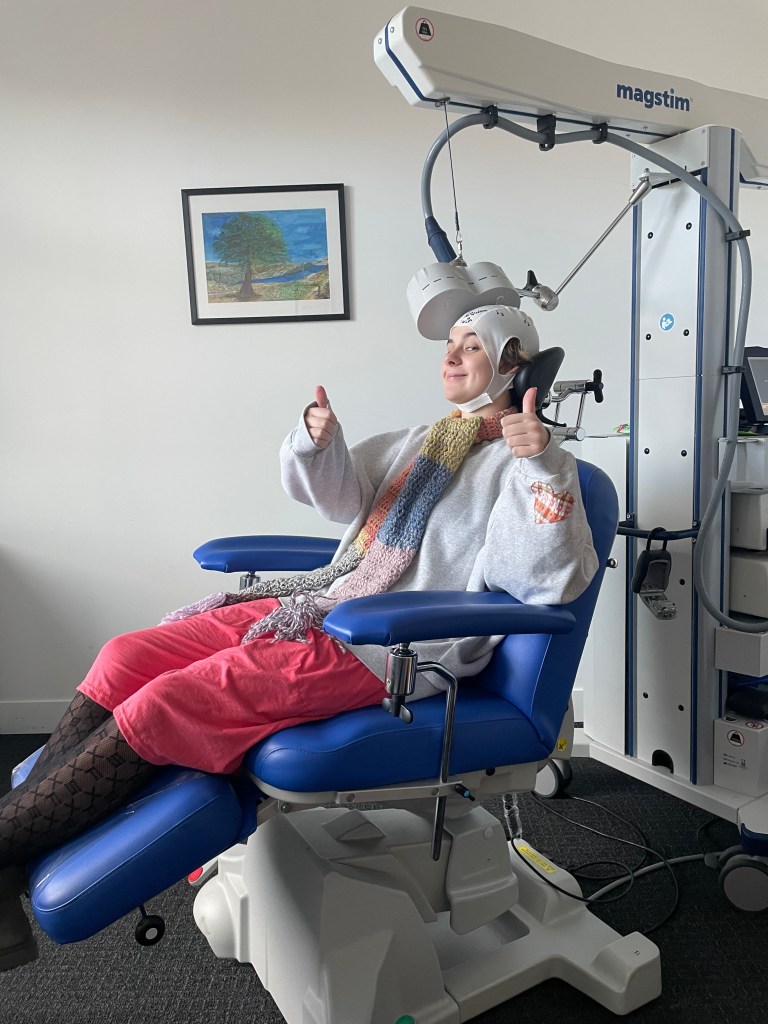
My first day of treatment: I arrived at the clinic and was greeted by the wonderful nurse who would carry out my sessions of rTMS. I was shown the machine and they let me put my hand against it to feel the sensation before it was done on my head. It didn’t hurt at all, it felt like someone was just tapping a pencil on my hand. I was then taken into the psychiatrists office where she asked me a few questions about my mood and then was scored from 0-10 on an anxiety scale. After this i was fitted for my cap i would be wearing throughout my treatments. They measured out my head, drew lines in sharpie on the cap where the machine would be targeting.

Anxiety sits in the right side of your brain and depression sits in the left. RTMS was specifically targeting my right side. When I sat down in the chair, I was positioned so I was comfortable whilst the machine moved closer to my head. The machine targets an area the size of a 50p coin and penetrates 2cm deep. Don’t worry there is no invasion, it’s purely an electromagnetic wave. They counted me down before I began the first treatment and assured me I could stop any time.
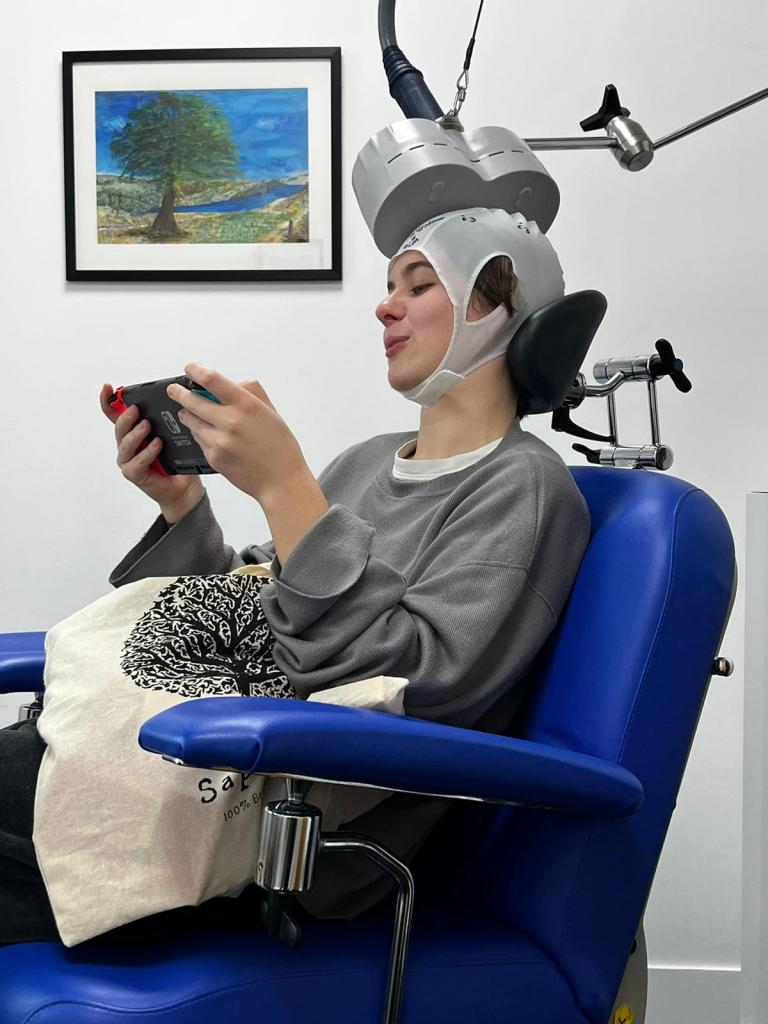
Each session lasts 20 minutes. I was instructed to do one session every day for 4 weeks Monday-Friday.
What did it feel like and sound like? It felt like someone was tapping me on the head with their index finger. The feeling got jarring after a while, as would any feeling of someone constantly tapping you on the head, but it wasn’t torcherous. The sound was a click like someone turning on and off a light switch but more electric and intense because it’s close to your ear! Every week the intensity of the electromagnetic pulses were turned up but only in the second week could I feel a difference, but it never hurt. Sometimes my right eye would twitch. It was funny to look at and I would laugh when it wouldn’t stop.
During my time with the nurses, I laughed, I cried and I also sat in silence. I got to know them on an extremely personal level. I was doing this treatment away from home, without my family there for support and so it was daunting, and so these nurses became somewhat family during my time with them. I remember one day I was going to the clinic and I was feeling extremely anxious and I refused to go into the clinic and sat on the floor like a child kicking and screaming. I was met by one of the nurses and she sat with me until I felt better and held my hand the whole time throughout the treatment. I truly couldn’t be thankful enough for their help. When I had to say goodbye to them we all even shed a few tears!

The big question: did it help? Yes it did and didn’t at the same time. Let me explain why. I thought going into the journey of rTMS that by the end of the 4 week programme I was going to be a new person with a new brain. But that isn’t how it works, it takes time for the neural pathways to settle and readjust. I had set my expectations way too high and so when I came back from Manchester I fell into a depression of some sorts that I wasn’t instantly fixed. That being said, the rTMS took away a lot of the physical symptoms of my anxiety. Before I was having 3 panic attacks a day, bed bound from migraines and hospitalized from the combination of the two. I noticed a significant drop in panic attacks and no more migraines to this day and it’s been just over a year since I stopped treatment.
In summary, rTMS is an extremely useful treatment option if medication doesn’t agree with you. It’s not scary, if anything it’s calming. After every session I came away feeling the most relaxed ever, just like that feeling after getting a massage. I would suggest having someone close to you there for support during the first week of treatment whilst you are adjusting to your new schedule especially if you are doing it in another area that isn’t near where you live. Set your expectations before treatment and discuss these with the nurses / psychiatrists.
Here is where I attended my rTMS treatment: https://www.tranquiltms.co.uk/ – I couldn’t recommend them higher if I tried!
If you have any questions or advice please drop me an Instagram DM
 Mind0verMatter
Leave a comment